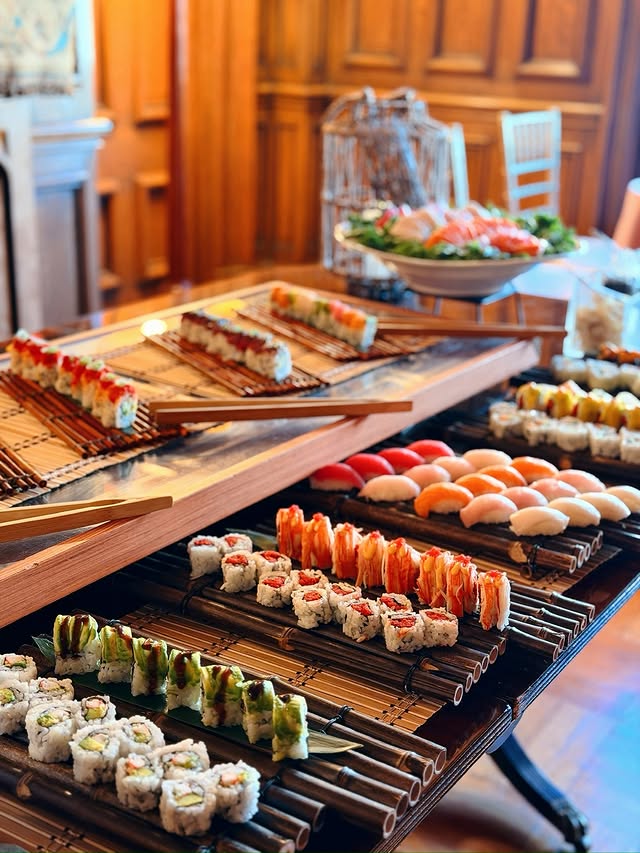
Your wedding day is one of the most significant celebrations of your life, and the food you serve sets the tone for the entire reception. More and more couples in New York City are moving away from predictable plated dinners and embracing sushi catering as a way to surprise, delight, and truly impress their guests. But choosing the right sushi caterer for a wedding is a different process than ordering platters for a casual Friday night. The stakes are higher, the logistics are more complex, and the expectations from your guests are elevated.
After catering hundreds of weddings across Manhattan, Brooklyn, Queens, and Long Island, we have seen what works and what does not. This guide walks you through every step of the decision-making process, from your first inquiry call to the final toast. Whether you are planning a 50-person rooftop ceremony in SoHo or a 300-guest celebration at a Long Island estate, the principles remain the same.
Table of Contents
- Why Sushi Catering Works for Weddings
- What to Look for in a Wedding Sushi Caterer
- Essential Questions to Ask Before Booking
- How to Plan Your Wedding Sushi Menu
- The Tasting Process: What to Expect
- Venue Logistics and Setup Requirements
- Pricing and Budgeting for Wedding Sushi
- Wedding Day Timeline for Sushi Service
- Common Mistakes to Avoid
- Frequently Asked Questions
Why Sushi Catering Works for Weddings
There is a reason sushi has become one of the most requested catering formats for weddings in New York City. It occupies a unique space in the culinary world: simultaneously sophisticated and approachable, visually stunning and deeply flavorful. A well-executed sushi spread does not just feed your guests. It becomes a focal point of the reception, a conversation starter, and in many cases, the thing people remember most vividly weeks later.
Sushi also solves a practical problem that many couples face. Traditional plated dinners require guests to sit down at the same time, eat the same course at the same pace, and wait through service gaps. Sushi, on the other hand, can be served as a cocktail hour feature, a live station, a buffet centerpiece, or even a late-night surprise. It adapts to your schedule rather than dictating it.
From a dietary perspective, sushi naturally accommodates a wide range of preferences. Your guests who eat fish, your vegetarian friends, and your gluten-conscious family members can all find something to enjoy without requiring entirely separate menus. This versatility is especially valuable in a city as diverse as New York, where your guest list likely spans multiple cultures and dietary traditions.
What to Look for in a Wedding Sushi Caterer
Not every sushi caterer is equipped to handle a wedding. Restaurant catering and event catering require fundamentally different skill sets. Here is what separates a caterer who can handle your wedding from one who will leave you stressed on your big day.
Proven Wedding Experience
Ask specifically about wedding experience, not just general event catering. Weddings operate on strict timelines. The caterer needs to coordinate with your planner, photographer, DJ, and venue manager. They need to understand that cocktail hour might start fifteen minutes late because the ceremony ran long, and they need to adjust without missing a beat. A caterer who has handled corporate lunches may not have the flexibility or composure required for wedding-day pressure.
Fish Quality and Sourcing Transparency
The single most important factor in sushi quality is the fish. Ask your caterer where they source their seafood. Are they buying from the Fulton Fish Market? Do they work with specific purveyors in Japan? Can they tell you what species of tuna they use and where it was caught? A caterer who cannot answer these questions with specificity is likely buying commodity-grade fish, and your guests will taste the difference.
Premium caterers in New York typically source from a combination of local fish markets and direct imports. They can tell you about the origin of their salmon, the grade of their tuna, and the season for their uni. This level of transparency is not a luxury; it is a baseline expectation for wedding-quality sushi.
Presentation and Styling
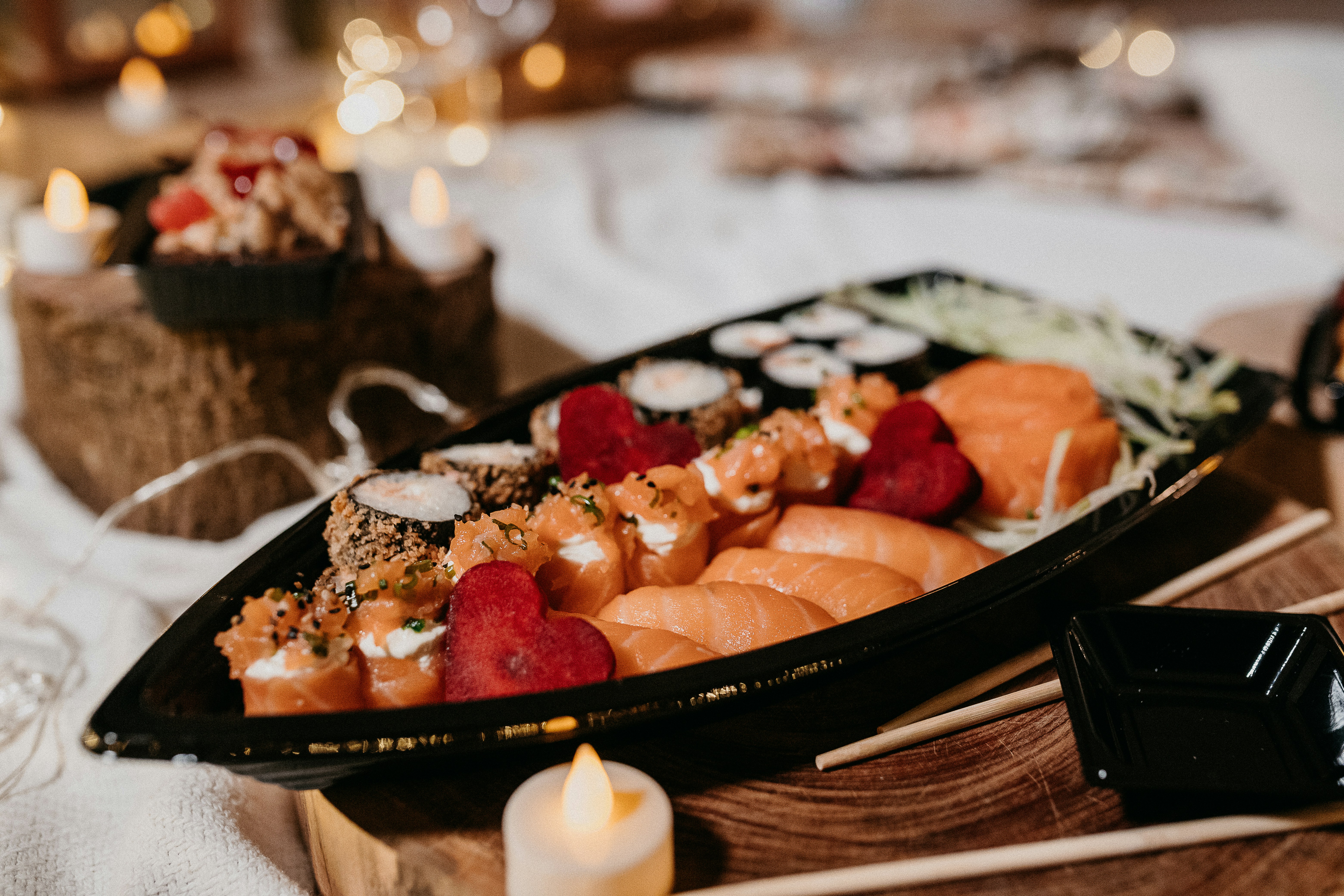
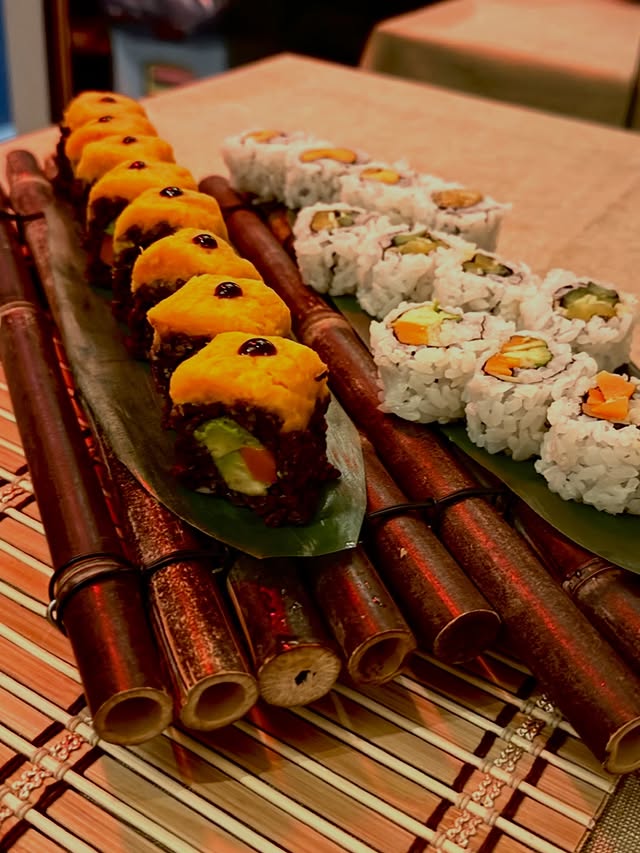
Wedding sushi is as much about visual impact as it is about taste. Look at the caterer's portfolio carefully. Do their platters look like art? Do they use natural elements like bamboo leaves, edible flowers, and carved garnishes? How do they handle the transition from a full display to a picked-over one? A skilled wedding sushi caterer designs their presentations to remain beautiful even as guests serve themselves throughout the evening.
Staffing and Professionalism
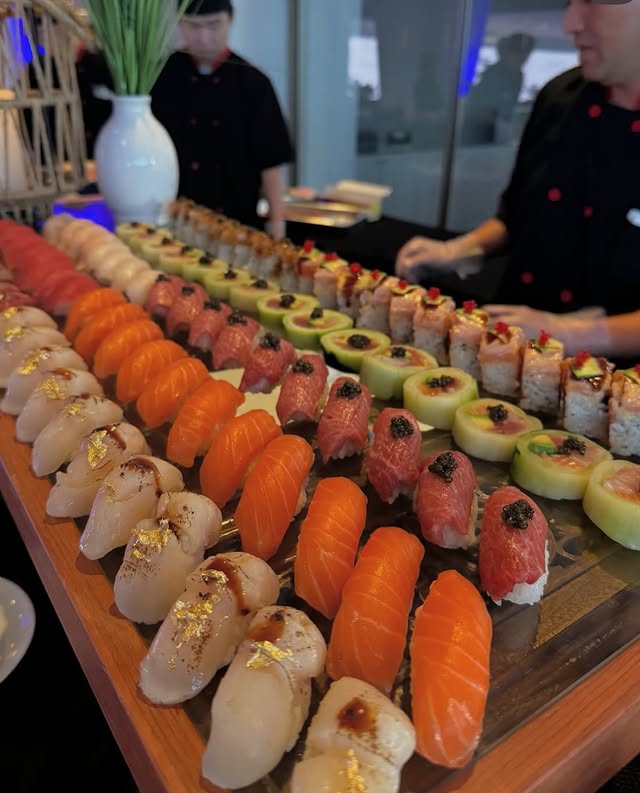
Your sushi chefs will be visible to your guests. They are part of the entertainment. Make sure the caterer sends experienced, personable chefs who can interact with guests, answer questions about the fish, and maintain a clean, professional station throughout the event. Ask about the staff-to-guest ratio and whether the same team that handles your tasting will work your wedding day.
Essential Questions to Ask Before Booking
The initial consultation with a potential caterer tells you a lot. Here are the questions that separate serious couples from those who end up with mediocre sushi on their wedding day.
- How many weddings have you catered in the past year? Look for a caterer who handles at least 20-30 weddings annually. This indicates they have systems in place for the unique demands of wedding service.
- What is your fish sourcing process? The answer should be specific: names of purveyors, frequency of delivery, and how they handle seasonal availability changes.
- Do you offer tastings, and what do they include? A tasting should represent your actual wedding menu, not a highlight reel of the caterer's best dishes that they will not actually serve at your event.
- What is your backup plan if a key ingredient is unavailable? Seasonal fish can be unpredictable. A good caterer will have substitution protocols and will communicate changes in advance.
- How do you handle dietary restrictions and allergies? This goes beyond offering vegetarian rolls. Ask about cross-contamination prevention, nut-free options, and how they label allergens on display.
- What does your setup and breakdown timeline look like? The caterer needs to work within your venue's load-in schedule and be completely cleared before your contracted end time.
- Can you provide references from recent weddings? Speak to at least two couples who used the caterer within the past six months.
How to Plan Your Wedding Sushi Menu
Menu planning is where the magic happens, and where most couples feel the most overwhelmed. The key is to build a menu that balances crowd-pleasers with signature items, offers something for every palate, and tells a story about who you are as a couple.
Start with Your Crowd-Pleasers
Every wedding sushi menu needs a strong foundation of universally loved options. These are the rolls and nigiri that even your guests who claim they do not like sushi will reach for. Think California rolls with real crab, salmon avocado, spicy tuna, and shrimp tempura. These should make up about 40% of your total menu volume.
Add Your Signature Pieces
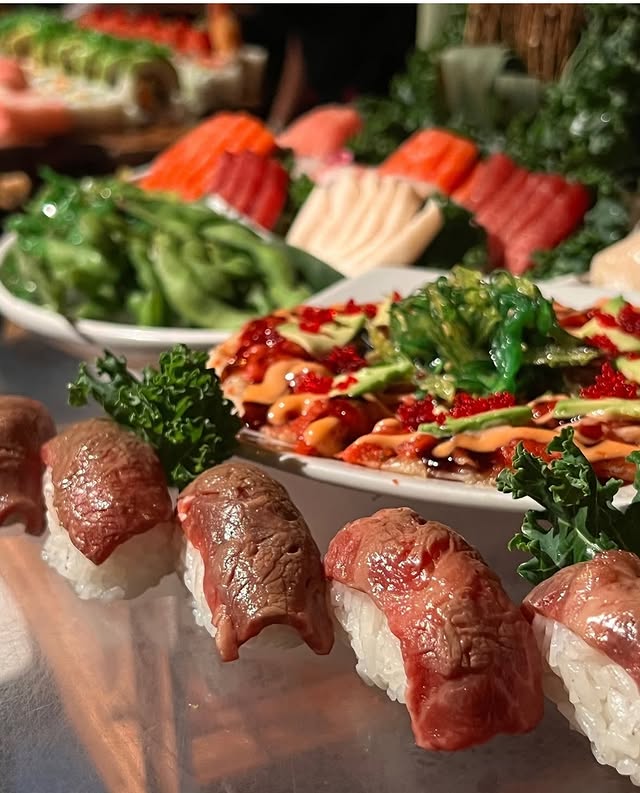
This is where you elevate the experience. Signature items might include a premium sashimi display with yellowtail and hamachi, truffle-infused wagyu nigiri, lobster rolls with yuzu aioli, or seasonal specials like Santa Barbara uni on warm rice. These items create the "wow" moments that guests photograph and share. Budget for about 25-30% of your menu here.
Accommodate Every Guest
The remaining 25-30% of your menu should address dietary needs. Vegetable rolls with avocado, cucumber, sweet potato tempura, and pickled radish are not afterthoughts. They should be crafted with the same care as your premium items. Offer at least two gluten-free options using tamari instead of soy sauce and rice-paper wraps. If you have vegan guests, ensure at least three fully plant-based selections.
How Much Sushi Per Guest?
For a cocktail hour, plan for 6-8 pieces per person. If sushi is the main course, increase to 12-15 pieces per person. For a wedding that includes both a cocktail hour sushi station and a dinner sushi buffet, plan for 18-22 pieces total per person. These numbers assume a mixed menu with other food options. If sushi is your only food service, add 20% to each estimate.
The Tasting Process: What to Expect
A proper wedding sushi tasting is not a casual lunch at the caterer's kitchen. It is a structured evaluation that should simulate your actual wedding experience. Here is what to look for.
The tasting should include every item on your proposed menu, prepared to the same standard as your wedding day. Pay attention to fish temperature, rice texture, and seasoning balance. Sushi rice should be slightly warm, lightly seasoned with vinegar, and hold together without being packed too tightly. The fish should smell like the ocean, not like fish.
Bring your wedding planner if you have one. Have them observe the caterer's presentation, timing, and responsiveness. Ask the caterer to plate the tasting the way they would present it at your reception. This gives you a preview of the visual impact.
Do not be afraid to give honest feedback. If a roll needs more spice, say so. If you want the rice seasoned differently, mention it. A confident caterer welcomes feedback and adjusts. A defensive caterer is a red flag.
Venue Logistics and Setup Requirements
Sushi catering has specific logistical requirements that differ from traditional catering. Understanding these upfront prevents surprises on your wedding day.
Temperature Control
Raw fish must be kept at precise temperatures. If your reception is outdoors in July, your caterer needs a refrigeration plan. This might mean bringing portable refrigeration units, rotating platters every 30 minutes, or using chilled display surfaces. An experienced wedding sushi caterer will have standard protocols for every season and venue type in New York.
Water and Electrical Access
Live sushi stations require access to running water for hand washing and workspace cleaning. They also need at least one dedicated electrical outlet for rice warmers and any heated equipment. Confirm with your venue what is available and communicate this to your caterer during the initial consultation.
Space Requirements
A single live sushi station typically requires a footprint of approximately 8 feet by 4 feet. If you are planning multiple stations or a large buffet display, work with both your caterer and venue to map out the floor plan. The sushi station should be accessible from at least two sides to prevent bottlenecks and allow for smooth guest flow.
Pricing and Budgeting for Wedding Sushi Catering
Wedding sushi catering in New York City typically ranges from $45 to $150 per person, depending on the level of service, menu selections, and event size. Here is how that breaks down.
What Affects the Price
- Menu complexity: A menu focused on maki rolls costs less than one featuring premium sashimi, live stations, and omakase-style coursed service.
- Guest count: Per-person costs often decrease slightly for larger events (150+ guests) due to economies of scale in preparation.
- Service style: Pre-arranged platters are less expensive than live stations, which require additional chef labor and equipment.
- Premium ingredients: Wagyu beef, A5 toro, uni, and imported ikura significantly increase per-person costs.
- Event duration: A 2-hour cocktail hour costs less than a 5-hour reception with continuous sushi service.
- Venue location: Events requiring significant travel or complex load-in logistics may include additional fees.
Typical Budget Ranges
Essential tier ($45-65 per person): Curated maki and nigiri platters, standard fish selections, basic presentation. Best for cocktail hour service or casual receptions.
Premium tier ($70-100 per person): Live sushi station with 1-2 chefs, expanded menu with premium fish, styled presentation with natural elements. The most popular tier for NYC weddings.
Luxury tier ($110-150+ per person): Multiple live stations, omakase-style coursed service, A5 wagyu and seasonal Japanese imports, custom presentation design. For couples who want sushi to be the centerpiece of their reception.
Wedding Day Timeline for Sushi Service
A smooth wedding day depends on precise coordination between your caterer and your other vendors. Here is a typical timeline for sushi catering service.
- 4-5 hours before service: Caterer arrives for load-in, begins prep in designated kitchen or prep area.
- 2-3 hours before service: Station setup, display arrangement, and rice preparation begins.
- 1 hour before service: Final quality check. Chefs are in position. Communication confirmed with your planner or coordinator.
- Cocktail hour: Live stations active. Passed sushi trays circulate. Display platters in place.
- Dinner service: If sushi is part of the main course, buffet or stationed service transitions seamlessly.
- Late-night service (optional): Scaled-down sushi bar for guests who want a midnight snack. This is an increasingly popular option for New York weddings with late receptions.
- 1 hour after service ends: Complete breakdown and removal. Venue left clean.
Common Mistakes to Avoid When Choosing a Wedding Sushi Caterer
After years of catering weddings in New York, we have seen patterns in what goes wrong when couples choose the wrong caterer or skip important planning steps.
Choosing Based on Price Alone
The cheapest option is rarely the best value for a wedding. Low-cost caterers often cut corners on fish quality, staffing levels, or presentation materials. Your guests may not know the difference between bluefin and yellowfin, but they absolutely notice when sushi tastes flat, looks sloppy, or runs out before everyone has been served.
Skipping the Tasting
Some couples skip the tasting to save time or money. This is a mistake you cannot undo. The tasting is your only opportunity to evaluate quality, provide feedback, and confirm that the caterer can deliver on their promises before committing several thousand dollars.
Not Communicating with Your Venue
Some venues have restrictions on outside catering, open flames, or specific load-in requirements. Confirm all logistics with both your venue and caterer well in advance. Discovering a conflict on your wedding day is not an option.
Underestimating Quantities
Running out of food at a wedding is one of the most memorable failures possible, and not in a good way. Always order 10-15% more than your calculated need. Leftover sushi is far preferable to hungry guests.
Ignoring the Weather
If any portion of your wedding is outdoors, your caterer needs a weather contingency plan. Raw fish and direct sunlight are not compatible. Make sure your caterer has experience with outdoor events in New York's variable climate and has protocols for extreme heat, humidity, or unexpected rain.
Frequently Asked Questions
For peak wedding season (May through October), we recommend booking your sushi caterer 6-9 months in advance. Premium caterers in New York book up quickly, especially for Saturday evenings. Off-season weddings (November through April) can sometimes be booked 3-4 months out, but earlier is always better to secure your preferred date and allow time for menu planning and tastings.
Absolutely. A well-planned wedding sushi menu includes cooked options like shrimp tempura rolls, eel and avocado, chicken teriyaki skewers, and edamame alongside the raw selections. Many of our most popular wedding items are fully cooked. We also offer vegetable-forward rolls that appeal to guests who prefer plant-based options. A good caterer ensures every guest finds something they love.
Yes, with proper handling. Professional sushi caterers use commercial-grade ice displays, refrigerated holding units, and timed platter rotations to maintain food safety in warm weather. We follow strict HACCP protocols and never allow fish to sit at unsafe temperatures. For outdoor summer events, we typically rotate display platters every 20-30 minutes and keep backup inventory in refrigerated containers on-site.
A live sushi station features one or more chefs preparing sushi to order in front of your guests, creating an interactive dining experience. Platter service involves pre-arranged displays of sushi that guests serve themselves from. Many weddings combine both: a live station during cocktail hour for the entertainment value, and elegant platters on dinner tables for convenience. Live stations cost more due to additional staffing but create a memorable visual element. Read our full comparison in Live Sushi Station vs Sushi Platters.
Planning Your Wedding Sushi Catering?
Let our team help you design a custom sushi menu for your New York City wedding. We offer complimentary consultations, personalized tastings, and flexible packages for every budget and guest count.