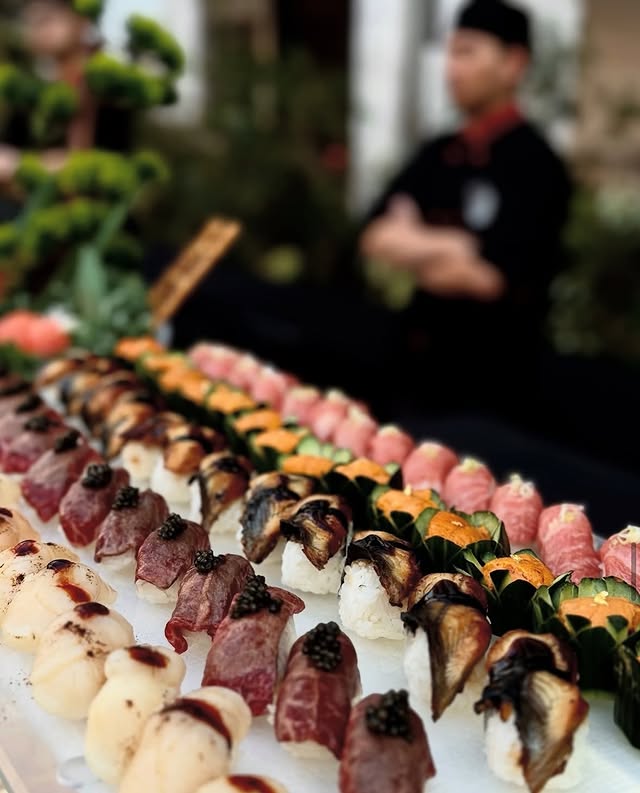
It is the question we hear more than any other from clients planning events in New York City: should I go with a live sushi station or pre-arranged platters? The answer is not as simple as picking one over the other. Each format has distinct strengths, specific cost implications, and ideal use cases. Choosing the wrong one can leave your guests underwhelmed, and choosing the right one can transform an ordinary gathering into a memorable experience.
We have served both formats at thousands of events across Manhattan, Brooklyn, and the greater New York area. This guide draws on that experience to give you an honest, practical comparison. No sales pitch. Just the information you need to make the right decision for your specific event, budget, and guest list.
Table of Contents
- What Is a Live Sushi Station?
- What Are Sushi Platters?
- Cost Comparison: Live Station vs Platters
- Guest Experience and Entertainment Value
- Visual Impact and Presentation
- Customization and Dietary Flexibility
- Freshness and Quality Differences
- Which Format Works Best for Each Event Type
- Can You Combine Both? The Hybrid Approach
- Frequently Asked Questions
What Is a Live Sushi Station?
A live sushi station is exactly what it sounds like: a fully equipped sushi bar set up at your event venue, staffed by one or more professional sushi chefs who prepare rolls, nigiri, and sashimi to order in front of your guests. Think of it as bringing the sushi counter from a high-end Japanese restaurant directly to your event, without the reservations, the markups, or the two-hour wait.
The station typically includes a preparation surface, refrigerated fish storage, rice warmers, and all the tools a chef needs to work at full speed. Depending on the caterer and the event size, you might have one chef handling 30-40 guests or three chefs managing a crowd of 200. The chef engages with guests, takes requests, and presents each piece with the same care you would expect at a premium omakase counter.
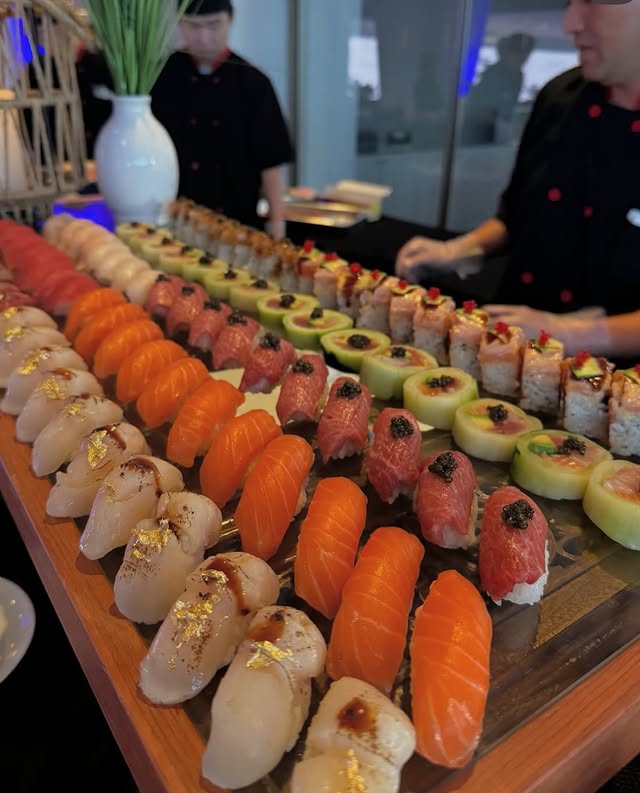
The setup requires advance coordination. Your caterer needs to know the venue layout, available utilities (water access, electrical outlets), and load-in logistics. Setup typically takes 45-90 minutes, and breakdown takes another 30-45 minutes. The station needs a footprint of roughly 6-8 feet by 3-4 feet, plus space on the guest side for a small queue to form naturally.
What Are Sushi Platters?
Sushi platters are pre-arranged displays of maki rolls, nigiri, and sometimes sashimi, prepared in a commercial kitchen or on-site prep area and presented on decorative trays, boards, or boxes. They are ready to eat when your event begins. Guests serve themselves from the display, or in some cases, individual platters are placed at each table.
Platters can range from straightforward roll assortments to elaborate multi-tiered displays with carved ice bases, bamboo accents, and artistic garnishes. The visual quality of a platter depends entirely on the caterer's skill and your willingness to invest in presentation. A well-designed sushi platter is a work of art. A mediocre one is just a tray of sushi.
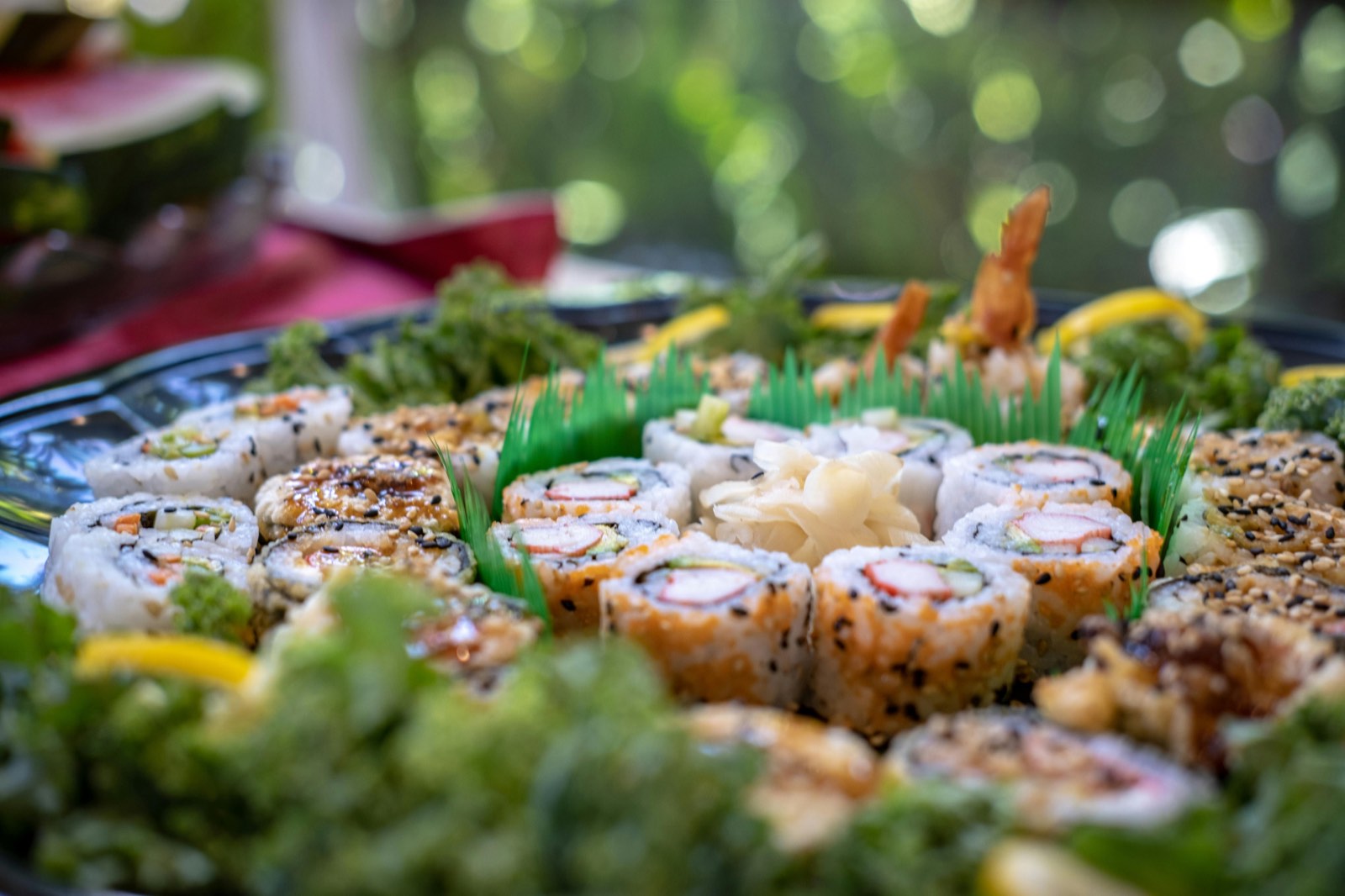
The logistics are simpler than a live station. Platters can be delivered and set up in 15-30 minutes. They do not require water access, electrical outlets, or significant floor space beyond the display surface. This makes them suitable for venues where a live station is impractical, such as historic buildings with limited kitchen access, outdoor spaces without utilities, or tight event rooms where every square foot matters.
How Much Does a Live Sushi Station Cost vs Platters?
Cost is usually the first question, so let us address it directly. The numbers below reflect current pricing for sushi catering in New York City as of 2025.
Live Sushi Station Pricing
- Per-person cost: $55-110, depending on menu selections and service duration
- Chef staffing fee: Typically included in the per-person price, but some caterers charge separately ($300-500 per chef for a 3-4 hour event)
- Setup and equipment: Usually included, though some caterers add a flat fee of $150-300 for equipment transport and setup
- Minimum guest count: Most caterers require 25-30 guests minimum to justify a live station
Sushi Platter Pricing
- Per-person cost: $30-65, depending on the variety and quality of fish
- Delivery fee: $25-75, depending on distance and building complexity
- Setup and styling: Basic setup is usually included; premium styled displays may add $100-250
- Minimum order: Typically 10-15 guests minimum
The Real Cost Difference
On paper, platters cost roughly 40-50% less per person than a live station. But the comparison is not apples to apples. A live station provides continuous service over several hours. Platters represent a fixed quantity that runs out when it runs out. If you order platters for a 3-hour event, you may need to order 2-3 rounds to maintain availability, which narrows the price gap considerably.
For a 50-person cocktail reception lasting 2 hours, here is a realistic comparison:
- Live station: $3,500-4,500 total (chef, fish, equipment, service)
- Platters (2 rounds): $2,500-3,500 total (two deliveries, setup, styled display)
- Effective difference: $500-1,500, or roughly $10-30 per person
That $10-30 per person buys you live entertainment, made-to-order freshness, and an interactive experience that fundamentally changes the atmosphere of your event. For many hosts, that premium is well worth it.
How Does Guest Experience Differ Between Live Stations and Platters?
This is where the two formats diverge most dramatically, and it is the factor that most hosts underestimate when making their decision.
The Live Station Experience
A live sushi station changes the dynamics of an event. It creates a natural gathering point where guests cluster, watch the chef work, ask questions about the fish, and make requests. It is interactive entertainment that also happens to produce food. Guests who might otherwise stand awkwardly with a drink now have something to do, somewhere to go, and a built-in conversation topic.
The sensory experience matters too. Guests see the knife work, hear the subtle sounds of preparation, smell the freshly cut fish and seasoned rice. There is a theater to it that taps into the same reason people love sitting at sushi counters in restaurants. It is intimate, immediate, and alive.
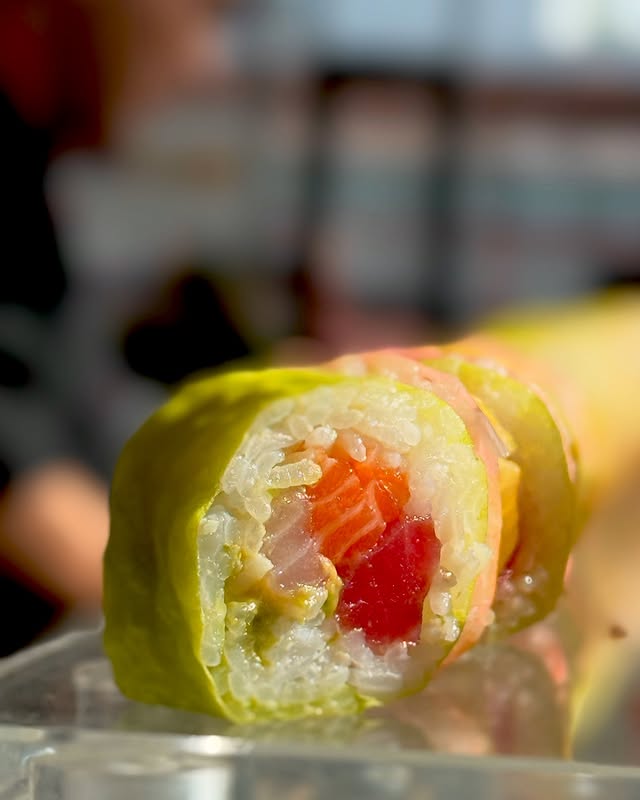
For the host, a live station also solves the pacing problem. Instead of guests descending on a buffet all at once, the station naturally meters the flow. Guests visit when they are ready, return for seconds when they want more, and never feel the pressure of a shrinking display.
The Platter Experience
Platters offer a different kind of experience: immediate abundance. When guests walk into a room and see a beautifully styled sushi display, the visual impact is instant and powerful. There is no waiting, no queue, no decision-making at the counter. Everything is available at once, and the sheer volume of a well-designed platter spread communicates generosity and celebration.
Platters also give guests more autonomy. They can take exactly what they want, in the quantity they want, without any social pressure to order or interact. For events with shy or introverted guests, or in cultures where direct interaction with service staff feels unfamiliar, this can be more comfortable than a live station.
The downside is that platters are static. They look their best in the first 20 minutes. As guests pick through the selection, the display becomes uneven, and the visual impact fades. A skilled caterer mitigates this by using smaller platters that are replaced frequently, but there is an inherent decline in presentation quality over time that a live station avoids entirely.
Visual Impact and Presentation: Which Looks Better?
Both formats can be visually spectacular, but they achieve their impact in different ways.
Platters: The Art of Arrangement
A premium sushi platter is designed as a complete composition. The caterer considers color balance (the orange of salmon against the red of tuna, the green of avocado, the white of rice), geometric patterns, negative space, and garnish placement. The best platter presentations rival floral arrangements in their visual sophistication.
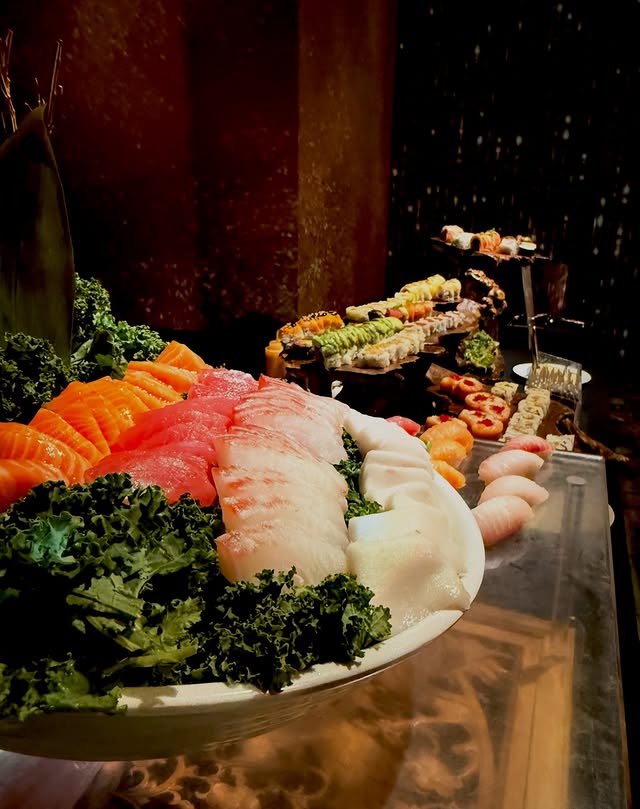
Multi-tiered displays, ice sculptures, and themed presentations push this even further. For events where the food display is part of the decor, like a product launch or a fashion event, platters offer more control over the aesthetic. You can coordinate the presentation with your event's design language in ways that a live station cannot match.
Live Stations: The Art of Performance
A live station's visual impact is kinetic rather than static. It is not about a perfectly arranged still life. It is about movement, skill, and the drama of creation. Watching a chef's knife move through a piece of tuna with surgical precision, seeing a roll come together in seconds, and having a piece of nigiri placed directly in front of you by the hands that made it creates a visceral impression that no platter can replicate.
The station itself becomes a focal point. A well-designed station with professional lighting, clean lines, and a skilled chef in traditional attire draws the eye and anchors the room. Guests photograph the chef at work, the mise en place, and the moment their sushi is handed to them. These are dynamic, story-telling photos that perform well on social media, much better than static food shots.
Can Guests Customize Their Sushi?
Customization is one of the live station's strongest advantages and one of the platter's greatest limitations.
Live Station Customization
At a live station, guests can make specific requests. A guest who does not eat raw fish asks for a cooked shrimp roll. Someone with a shellfish allergy requests a salmon-only selection. A guest who loves spice asks for extra wasabi inside the roll. The chef accommodates in real time, creating a personalized experience for each guest.
This flexibility is particularly valuable for events with diverse dietary needs. Rather than guessing how many vegetarian rolls to pre-order and hoping you do not run out or over-order, the chef adjusts quantities based on actual demand. If a third of your guests turn out to be vegetarian, the chef shifts production accordingly. This responsiveness is impossible with platters.
Platter Customization
With platters, customization happens before the event, not during it. You choose the menu in advance, commit to quantities, and what arrives is what your guests get. You can and should design the menu to accommodate anticipated dietary needs, but you are working with estimates. If you order 30% vegetarian and only 10% of your guests are vegetarian, you have wasted money. If you order 10% and 30% of your guests are vegetarian, people go hungry.
The solution is to over-order, which most experienced hosts do. But over-ordering on platters means paying for food that may go uneaten, while a live station only produces what is consumed.
Does a Live Station Produce Fresher Sushi?
Yes, unequivocally. This is not a matter of opinion; it is a function of timing and physics.
Sushi begins to degrade the moment it is assembled. The rice dries out, the fish warms, and the nori on maki rolls absorbs moisture and loses its crispness. A piece of sushi eaten within 5 minutes of preparation is a fundamentally different experience from one that has been sitting on a platter for 45 minutes.
At a live station, every piece is made to order. The rice is warm, the fish is cold, and the nori (if applicable) is crisp. The textural contrast is at its peak. This is the sushi you eat at a high-end restaurant counter, and it is the sushi your guests receive at a live station.
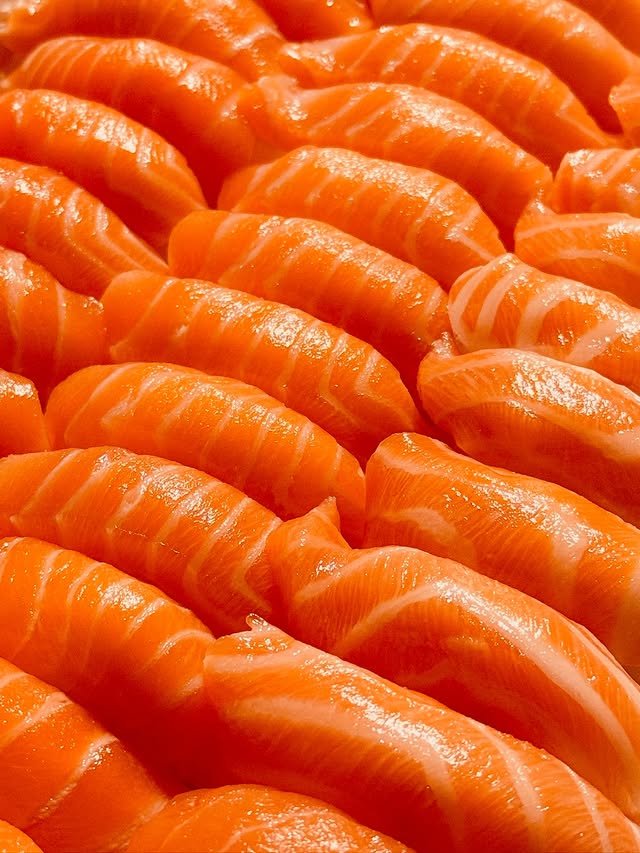
Platters, by contrast, are assembled in advance. Even with careful temperature management and professional handling, the sushi has been sitting for 30-90 minutes by the time most guests eat it. This is still perfectly safe and enjoyable, but it is not the same experience as made-to-order. The rice is room temperature, the fish has equalized, and any nori-wrapped rolls have softened.
For most casual events, this quality difference is acceptable. For events where food quality is a priority, like a wedding, a milestone celebration, or a high-profile client dinner, the freshness advantage of a live station is significant.
Which Format Works Best for Each Event Type?
Here is our recommendation based on years of experience catering events across New York City. These are not rigid rules, but they reflect what consistently works best for each scenario.
Choose a Live Sushi Station When...
- Weddings: The entertainment value and freshness quality justify the premium. A live station during cocktail hour is one of the most impactful catering decisions you can make.
- Corporate client entertainment: The interactivity impresses clients and creates natural conversation opportunities. It signals that your company does not cut corners.
- Intimate dinner parties (under 40 guests): Every guest gets personal attention from the chef, creating an omakase-like experience.
- Product launches and press events: The visual drama of a working chef generates media-worthy moments and social media content.
- Events longer than 2 hours: The continuous service model keeps food fresh throughout without requiring multiple deliveries.
Choose Sushi Platters When...
- Office lunches and casual team events: The simplicity and lower cost make platters the practical choice for regular workplace catering.
- Large-scale events (200+ guests) on a budget: Platters can feed large groups more cost-effectively than staffing multiple live stations.
- Venues without utility access: No water, no power, no problem. Platters need only a table.
- Events shorter than 90 minutes: If the eating window is short, the freshness advantage of a live station is minimal, and the immediate availability of platters is more efficient.
- Supplementary sushi alongside other food: When sushi is one of several food stations, platters provide variety without the overhead of dedicated chef staffing.
The Hybrid Approach: Combining Live Stations and Platters
Many of our most successful events use a combination of both formats. The hybrid approach gives you the best of both worlds: the visual abundance of platters and the interactive freshness of a live station.
How the Hybrid Model Works
The most common hybrid setup uses pre-arranged platters as the foundation spread, available from the moment guests arrive, supplemented by a live station where a chef prepares specialty items to order. The platters handle the crowd-pleasers, the California rolls and spicy tuna that everyone reaches for immediately. The live station handles the premium items: nigiri made with A5 tuna, hand rolls with seasonal fish, and custom requests.
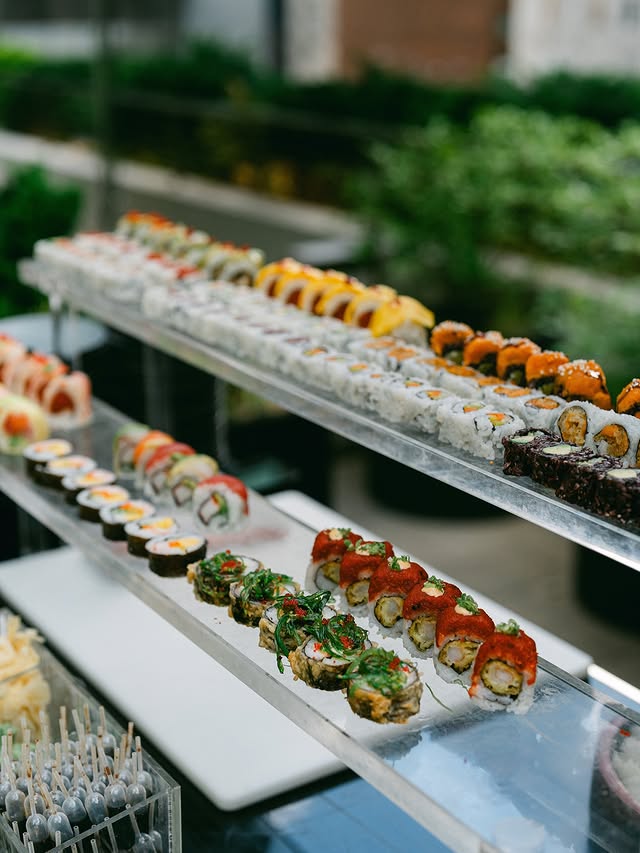
This approach is particularly effective for weddings, where you want immediate abundance during cocktail hour but also want the entertainment and quality of a live chef. Guests grab a California roll from the platter while they wait for the chef to prepare their custom piece. There is no gap in service and no idle moment.
Cost of the Hybrid Approach
A hybrid setup typically costs 15-20% more than a live station alone because you are paying for both prepared platters and chef-staffed service. However, it often costs less than you might expect because the platters handle the high-volume items, allowing the live station to focus on smaller quantities of premium selections. For a 75-person event, expect to pay $65-95 per person for a well-executed hybrid setup.
When to Choose the Hybrid
- Events with 75-150 guests: Large enough to justify a live station, but the platters prevent long wait times.
- Multi-phase events: Platters during cocktail hour, live station during the main event, platters again for late-night snacking.
- Events with mixed demographics: Some guests will gravitate toward the live station; others will prefer the self-service platters. The hybrid accommodates both preferences.
Frequently Asked Questions
An experienced sushi chef can comfortably serve 30-40 guests during a 2-3 hour event. For events with 50-80 guests, we recommend two chefs. For 100+ guests, three or more chefs are needed to maintain reasonable wait times. Wait times should never exceed 5-7 minutes. If guests are waiting longer than that, you need additional chef staffing.
In a temperature-controlled indoor environment, sushi platters remain at peak quality for about 60-90 minutes and are safe to consume for up to 2 hours. Beyond that, quality declines noticeably, particularly for nigiri and sashimi. For events longer than 2 hours, we strongly recommend either a live station or staged platter deliveries with fresh rounds replacing depleted ones every 60-75 minutes.
Yes, with proper planning. Outdoor live stations require shade coverage (a tent or canopy), access to a generator or outdoor electrical outlet, and a portable water supply for handwashing. We also bring additional refrigeration for fish storage. In summer months, we use insulated prep surfaces and ice baths to maintain safe temperatures. We have successfully run outdoor live stations at rooftop events, garden parties, and beachside celebrations throughout the New York area.
Yes, though it becomes a more intimate, omakase-style experience rather than a traditional station setup. For groups this small, the chef can sit with or stand near the guests, presenting each course personally and tailoring the menu to individual preferences in real time. This is actually one of the most special formats we offer. The per-person cost is higher ($85-120) because the chef is dedicated to a smaller group, but the personalization and quality of the experience are unmatched.
Not Sure Which Format Is Right for Your Event?
Tell us about your event, guest count, and budget, and we will recommend the perfect sushi catering format. Whether it is a live station, platters, or a hybrid approach, we design every event to exceed expectations.